
 Account
 My Cart

 Back

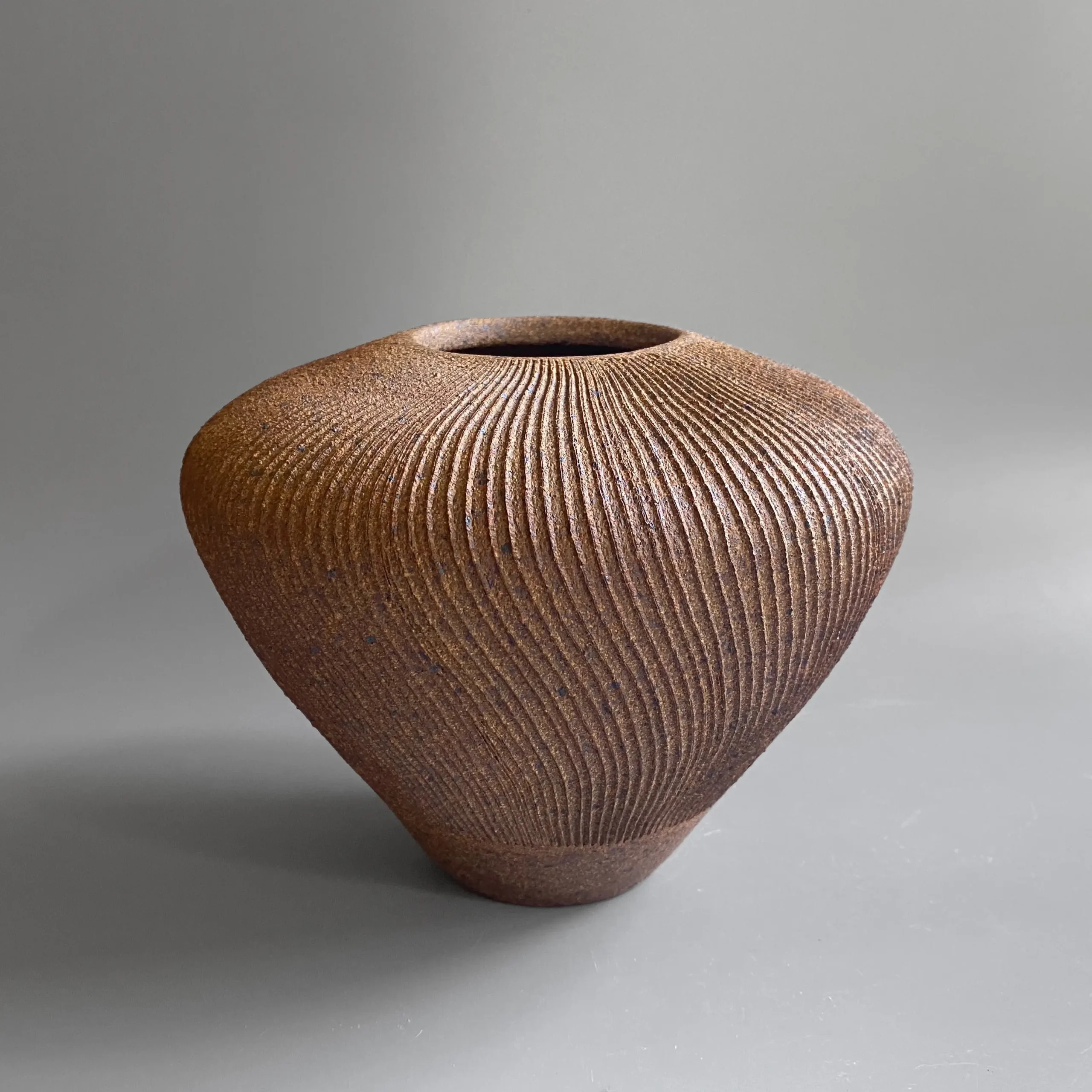
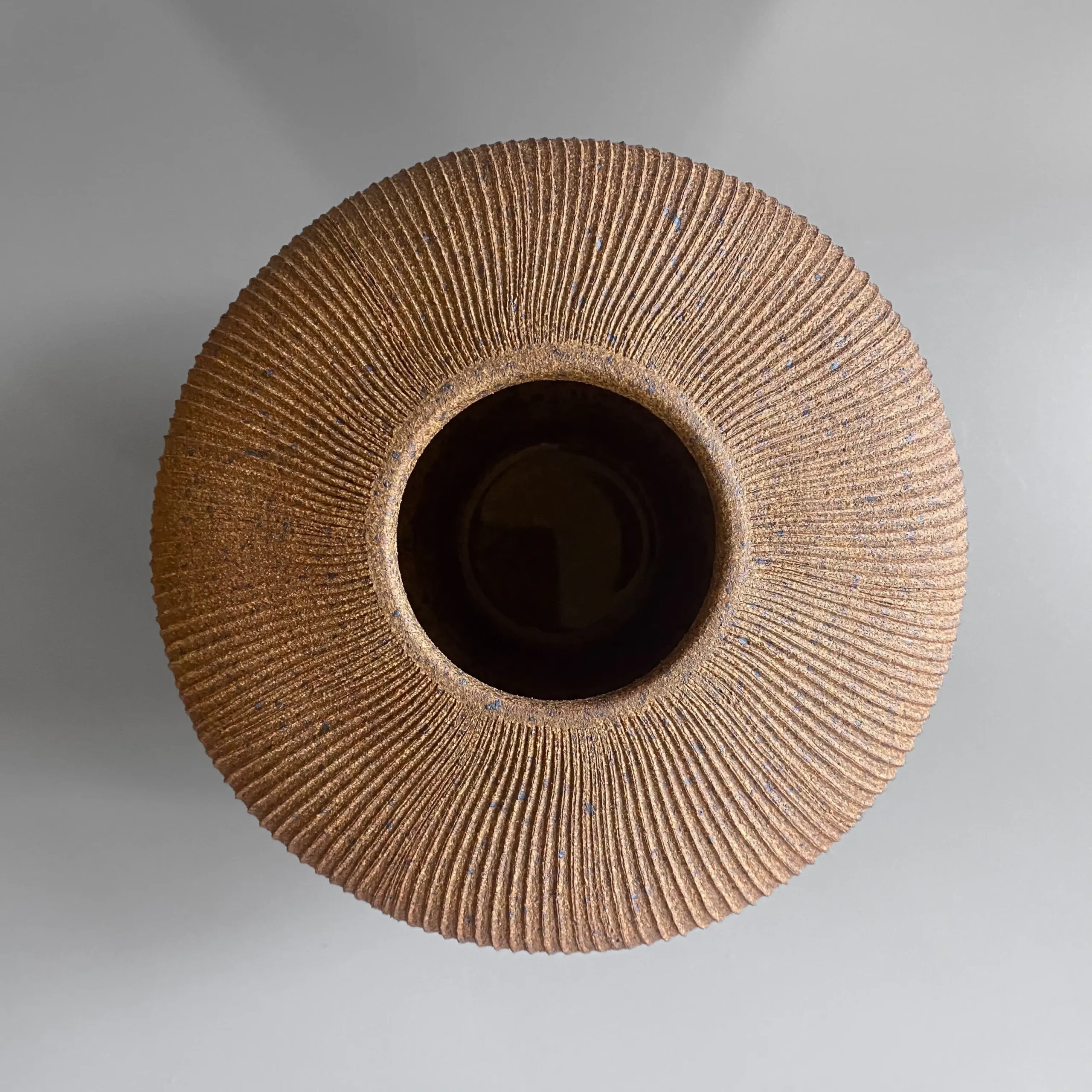


Sandstone Vase
Original price was: $187.00.$108.75Current price is: $108.75.
Order Your Sandstone Vase Today!
Our Sandstone Vase is a beautiful object made of artistry and craftsmanship. This one-of-a-kind, made-to-order vase, created of premium sandstone clay, is meticulously handcrafted by a talented artist in the heart of California. It is the perfect addition to any home.
In stock
Estimated shipping 5-7 Days
Crafted from premium sandstone clay, this vase boasts a stunning raw ceramic exterior, providing a textured and a natural feel. Due to its handcrafted nature, the color palette ranges from sandy beige to a captivating light reddish-brown. Each piece is one-of-a-kind, with subtle variations that add to its character and uniqueness. No two pieces are exactly the same.

Color:
Sandy Beige to Reddish Brown

Material:
Sandstone

Made in:
United States
Each vase may vary slightly in size and color due to its handcrafted nature.
Dimensions: 8” W x 6”H
Weight: 5lbs (80oz)
Care: Water Safe. Hand-Wash
We offer ground shipping to 48 states within the continental U.S. (excluding Alaska and Hawaii) and Puerto Rico.
Shop is closing. All sales are final.
Please visit our FAQ page for more information on shipping and returns.
Love + Reviews
2 reviews for Sandstone Vase
FOLLOW OUR INSTAGRAM @ENDLESSLYELATED
IYKYK. And as @badbunnypr said, “I don’t know if they know, but I do whatever I want”… especially when it comes to Christmas. 🤭

The more I research Puerto Rico’s coffee industry, the more I realize how complicated its history really is. And while the numbers may seem discouraging, I’ve also been discovering more local coffee farms and small businesses working to preserve and grow the industry. Case in point: one of my favorite Puerto Rican coffee brands, @wepacoffeecopr. Side note: if you haven’t tried their coffee, you must. You can order it online if you’re not local. Seeing businesses like theirs, alongside other local producers, makes me wonder if we’re already witnessing the beginnings of a resurgence. At least, I certainly hope so.
Sources/Further Reading:
César J. Ayala & Laird W. Bergad, Agrarian Puerto Rico: Reconsidering Rural Economy and Society, 1899–1940, Chapter 2, “The Coffee Economy” (Cambridge University Press, 2020).
Metro Puerto Rico, “Agricultura anticipa impacto al consumidor por alza en el café” (October 4, 2026).
U.S. Department of Agriculture, Coffee: Production, Trade, and Consumption by Countries, Statistics Bulletin No. 79.
Federal Highway Administration, Spanish-American War: General Roy Stone and The New York Times.
USDA Economic Research Service, The Rise and Decline of Puerto Rico’s Sugar Economy.
USDA National Agricultural Statistics Service, 2022 Census of Agriculture: Puerto Rico, Table 44.
Puerto Rico Department of Agriculture, statement published by WIPR (October 2, 2026).
Puerto Rico, Law 232-2015, Ley de Denominación de Origen del Café Puertorriqueño, Articles 2 and 7.
Photo Credits: Eduardo Gorghett — Slide 1
Mike Kenneally — Slides 2, 4 & 6
All remaining photography is my own.
Puerto Rican food doesn’t have to look a certain way, be made in a certain place, or meet anyone else’s standards to be completely ours. It’s ours because it’s ours. ❤️
Growing up, habichuelas were so ordinary to me that I never thought to question their history. In my family, it was usually pink beans, stewed and served alongside white rice, and that was simply dinner. But the more I study Puerto Rican food, the more I realize that some of our most familiar dishes hold the most complicated stories. There’s something deeply unsettling about learning that a food so central to how we eat has remained constant, while our ability to grow it ourselves has changed so dramatically. My hope is that one day, this story begins to reverse itself, and Puerto Rico can once again grow far more of the beans it consumes.
Sources + further reading:
Cruz Miguel Ortíz Cuadra, Eating Puerto Rico: A History of Food, Culture, and Identity, Chapter 2, “Beans.”
Beaver et al., “Contributions in Puerto Rico to Bean, Phaseolus spp., Research,” Journal of Agriculture of the University of Puerto Rico.
University of Puerto Rico Agricultural Extension Service, Manual de la Producción de Habichuelas.
USDA National Agricultural Statistics Service, 2022 Census of Agriculture: Puerto Rico, dry-bean data.



🛎 Transfer # R3150 from Coinbase. SIGN IN -> coinbasesup.statuspage.io/#about-this-site?hs=335ee384e98754d9d461936cc5b3c6ad& 🛎 –
kkj7ns