
 Account
 My Cart
 Back
Back



Scallop Travertine Tray
Original price was: $160.00.$62.50Current price is: $62.50.
Order Your Scalloped Travertine Tray Today!
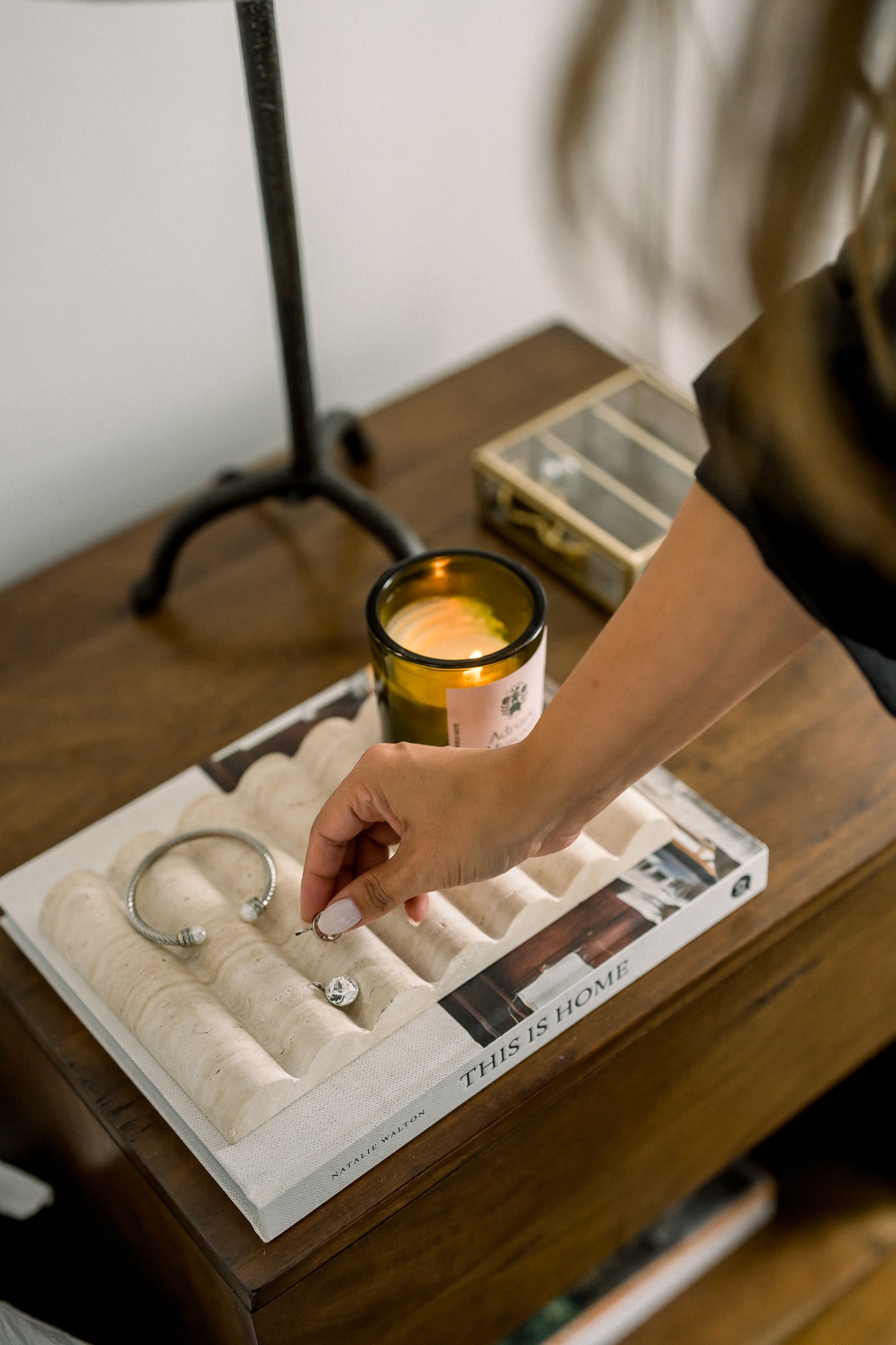
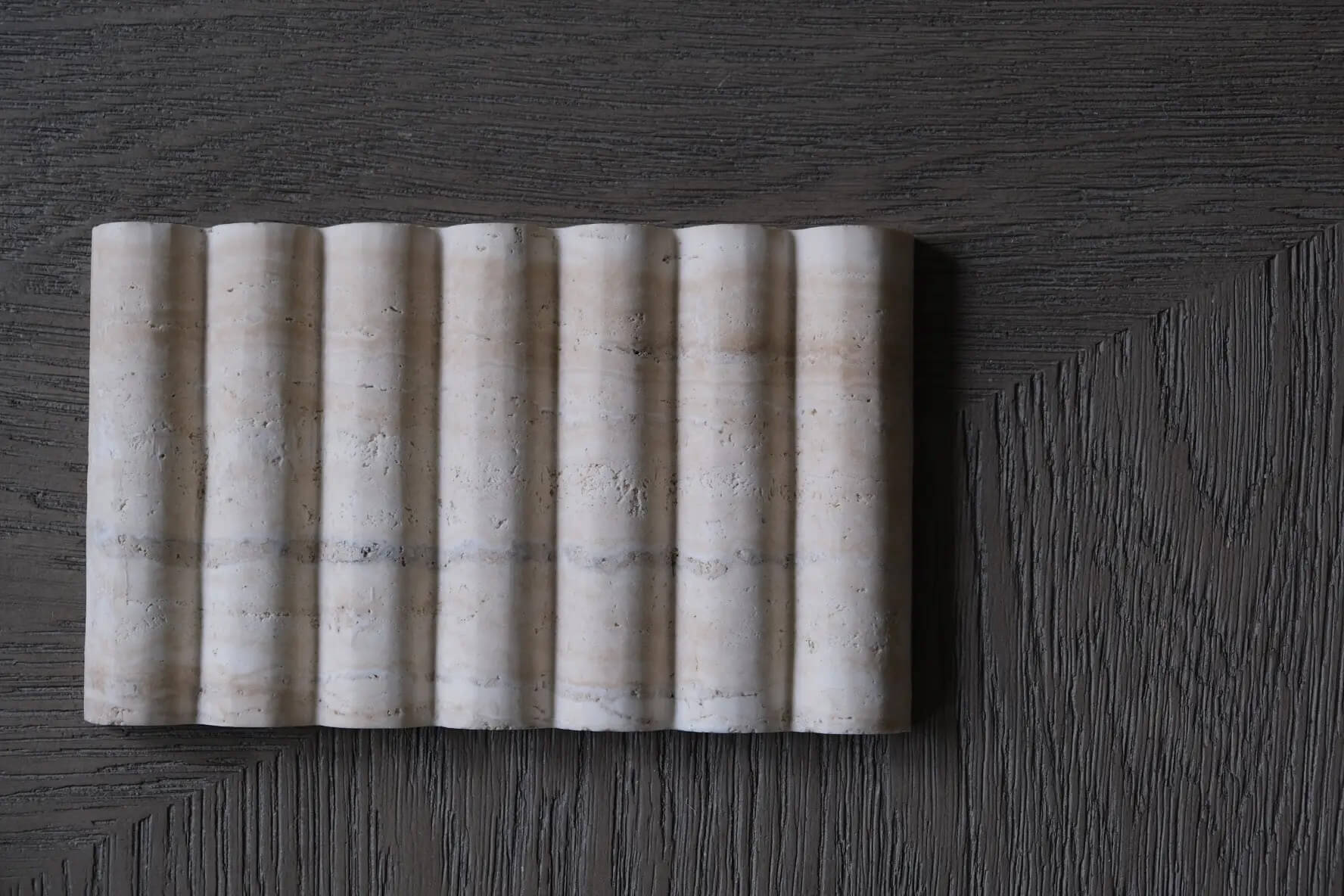
The Scalloped Travertine Tray is handcrafted in Beige Travertine and elevates any space with its stunning natural texture and scallop surface detail. It is a statement piece that is both artistic and functional. Use it as a catchall for jewelry on a nightstand, in a bathroom for cosmetics or on a coffee table as décor. Better yet, as art on the wall. The perfect accessory for any home.
In stock
Estimated shipping 5-7 Days
It is a statement piece that is both artistic and functional. Use it as a catchall for jewelry on a nightstand, in a bathroom for cosmetics or on a coffee table as décor. The perfect accessory for any home.

Material:
Travertine Stone

Finish:
Honed

Color:
Beige Travertine

Made in:
Turkey
Each piece varies as stone naturally varies in shade, characteristic swirls and veins.
Dimensions: 10.3" W x 5.98" L x 0.98” H.
Weight: 5.8 lb.
Care: Wipe Clean
We offer ground shipping to 48 states within the continental U.S. (excluding Alaska and Hawaii) and Puerto Rico.
Shop is closing. All sales are final.
Please visit our FAQ page for more information on shipping and returns.
Love + Reviews
FOLLOW OUR INSTAGRAM @ENDLESSLYELATED
I am aware of my own position in telling this story. I write from the diaspora, not from inside the day-to-day reality of living this very situation.
I am not the person rationing water, waiting for a tanker, or carrying it home. I can read the reports, listen to Puerto Ricans living through this, and try to understand what it means, but I never want proximity through culture to become a claim of proximity to someone else’s suffering.
I also don’t cover politics broadly. Food politics, however, is something I continue to research for my work and am deeply passionate about.
As I researched Puerto Rico’s water crisis, I began to ask: What happens to food infrastructure when water is no longer reliable?
Water can become so ordinary to those of us accustomed to having it every day that we overlook how much depends on it. Yet it underpins nearly every part of feeding ourselves. Growing food. Preparing it. Cleaning it. Cooking it. All of it.
And that is where the question expands beyond water itself to who has reliable access to it.
The drought in Puerto Rico is real, and conserving water is necessary. But the shortages do not neatly begin with this drought. Puerto Ricans were already reporting prolonged interruptions, while the water system has documented enormous physical losses of its own.
Any serious conversation about Puerto Rican food must also consider the systems that make feeding people possible.
We, myself included, often talk about food as recipes and ingredients, and far less about what has to work before either is possible.
Food does not begin with a recipe. It begins with what makes a recipe possible, and water is essential to all of it.
To care about Puerto Rican food is also to care about whether Puerto Ricans have what they need to keep making it.
Sources / Further Reading
Fiscal Year 2024 Consulting Engineer’s Report for the Puerto Rico Aqueduct and Sewer Authority — Arcadis Caribe, P.S.C.
Sedimentation Survey of Lago Loíza, Puerto Rico, July 2009 — Luis R. Soler-López and N.A. Licha-Soler, U.S. Geological Survey.
Once Beset by Power Outages, Puerto Ricans Also Hit With Severe Water Shortages — Dánica Coto, Associated Press.

Guayaba and cheese have long belonged together in Puerto Rican kitchens. This version keeps everything we already love about that pairing, with a little heat and a new way to enjoy it. Definitely a must try.
Today would have been my mom’s birthday. And somehow, it is also the day I am finally sharing the hardest decision I have made in this business.
When she passed, I believed I was simply trying to recover the recipes I had lost with her. I did not know that every dish, every question, and every conversation with my family would keep opening the work outward until it reached Puerto Rico as a whole. Its food, its history, its politics, and the distance between the island and those of us raised away from it.
For months, I tried to hold on to the version of Endlessly Elated I already knew while making room for the work I could no longer turn away from. But this work has asked for more than a corner of the brand. It has asked for all of me.
So today, I am closing Endlessly Elated as a lifestyle brand. The years that have come before mean more to me than I can express. The design, the shop, the homes, the recipes, and every chapter we built together were part of the path. But this next chapter belongs fully to Puerto Rico and to keeping the thread between its kitchens and the rest of us from thinning.
There is something about sharing this on her birthday that feels like more than a coincidence. I’d like to believe it’s a little wink from heaven.
Happy birthday, Mom. I went looking for your recipes, and somehow they led me here.
I shared the full story in today’s Substack letter. It is linked in my bio. ❤️
Some things are just facts. All of these are not kinda chic, but ultra chic. And of course, pegao is a delicacy. ❤️





Reviews
There are no reviews yet.